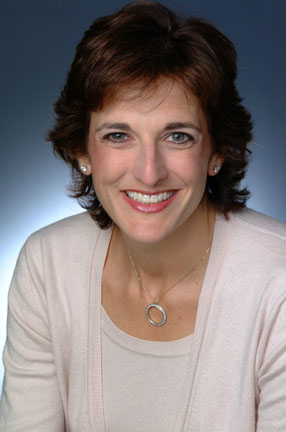
My love of regulators is newly found. After all, I work in an industry that is often at odds with the folks who are supposed to oversee us. I have been frustrated in the past because sometimes these folks make a huge deal out of something pretty puny, but then miss the elephant in the room. Not so with my most favorite regulator of all, Sheila Bair, the Chairman of the Federal Deposit Insurance Corp (FDIC). Ms. Bair is the cream of the crop and I want to be the first to say it in public: I heart Sheila Bair.
My infatuation developed when she spoke articulately about what she perceived as the problem with TARP: it did not go to the root of the problem at hand, that is, the collapsing real estate market and the rapid advance of foreclosures. She noted in an interview with the Wall Street Journal (10/22/08) that she was frustrated that the government was providing “massive assistance at the institutional level” to the lenders (i.e. the financial institutions) but not enough help to the borrowers who were in trouble and potentially facing foreclosure. Ms. Bair had hoped for relief to come in the form of how she managed the loans that failed IndyMac Bancorp Inc. held. After the FDIC took over that bank in July, Ms. Bair said it would halt foreclosures on the mortgages it owned and would try to modify loans for struggling homeowners.
Well it only took four months, but it looks like there are others who are seeing the wisdom in Ms. Bair’s approach. Yesterday Fannie Mae and Freddie Mac, along with U.S. officials, announced plans to modify hundreds of thousands of loans held by the massive entities in order to prevent foreclosures. The effort will be available to those borrowers who meet certain criteria: the homes must be owner-occupied, escrows for real estate taxes and insurance must be established, the loans must be 90 days or more past due; the borrowers would need to owe 90 percent or more than the home is currently worth; and they would have to provide a statement or affidavit showing that they have encountered some sort of hardship that has impacted their ability to pay their mortgage. The program would only apply to loans made on or before Jan. 1, 2008, and borrowers will be disqualified if they file for bankruptcy.
The goal of the program is to reduce the ratio of mortgage payments for these homeowners to 38% of their income by modifying interest rates, extending the life of the loan and in some cases forgiving portions of principal debt. While officials did
not have an estimate of how many people would qualify, estimates range in the hundreds of thousands. According to the most recent data from the Mortgage Bankers Association at the end of June, more than 4 million American homeowners, or 9% of mortgagees were either behind on their payments or in foreclosure.
The Fannie/Freddie program would augment similar plans announced by Citigroup, JP Morgan Chase and Bank of America. Citigroup plans to not only renegotiate loans that have already reached a critical point, the bank also plans to contact 500,000 homeowners, or 1/3 of all mortgages that it owns, who are on the verge of falling behind. The bank will create a team of 600 salespeople to assist the targeted borrowers by adjusting their rates, reducing principal or increasing the term of the loan. Late last month, JPMorgan Chase & Co expanded its mortgage modification program to an estimated $70 billion in loans, which could aid as many as 400,000 customers and Bank of America, meanwhile, has said that starting Dec. 1, it will modify an estimated 400,000 loans held by newly acquired Countrywide Financial Corp. as part of an $8.4 billion legal settlement reached with 11 states last month.
It looks like the industry has caught on and realized that Ms. Bair was right on in her assessment of what needs to get done. Yes, it was important to secure the financial system, but it is equally important to focus on where the problems began and address them head on. The world is catching on to my great admiration of Ms. Bair—on Monday, the Wall Street Journal named Bair the Number One Woman to Watch in 2008. I think that I speak for the WSJ when I say that we all heart Sheila Bair!
Showing posts with label TARP. Show all posts
Showing posts with label TARP. Show all posts
Wednesday, November 12, 2008


Wednesday, October 15, 2008
TAP the TARP
Treasury Secretary Henry Paulson was seen as the US government’s front man as the credit crisis escalated. But then the whole debate on the rescue bill tainted his image as the financial wonder-boy from Goldman Sachs. As investors stared into the abyss and contemplated the “Second Great Depression” a new hero emerged—it was Federal Reserve Chairman and Depression-expert Ben Bernanke.
Yesterday, it was Ben’s turn to explain the government’s new plan to the world. He penned an opinion piece for the Wall Street Journal called “We're Laying the Groundwork for Recovery -- The necessary policy tools are in place.” (With all due respect to Bernanke, he is an economist, not a tabloid headline writer!) The article was published a day after the US announced a sweeping plan to stabilize the banking system.
Following the lead of the UK and other countries in Europe, the government said that it would TAP the TARP this week to bolster the banking industry. Uncle Sam will invest $250 billion into the nation’s banks in exchange for preferred stock. Half of the lump sum was directed towards large banks- Bank of America, Citigroup, JP Morgan Chase and Wells Fargo and all will get $25 billion, Goldman Sachs and Morgan Stanley, the country’s newest bank holding companies, will pocket $10 billion, Bank of New York and State Street are due to receive $2-3 billion. The government will also guarantee all senior debt issued by banks over the next three years and will provide unlimited FDIC insurance to all noninterest-nearing accounts, which are used primarily by businesses.
Mr. Bernanke assures us that these actions, combines with all of the previous efforts, will be able to meet the challenges in the
markets and in the economy. “We will not stand down until we have achieved our goals of repairing and reforming our financial system, and thereby restoring prosperity to our economy.” Time will tell if he is right, but as we entered last weekend, it was clear that the government’s previous efforts were not working fast enough, as interbank lending was under increasing strain, equity market volatility was reaching all-time highs and credit markets were making new lows. In Bernanke’s words, “clearly the time had come for a more comprehensive and broad-based solution.”
The global action was needed to reduce systemic risk and to restore the functioning of global financial markets. Indeed the plan may eventually accomplish this lofty goal, but it will be a long process. Mr. Bernanke himself acknowledged that “at the root of the problem is a loss of confidence by investors and the public in the strength of key financial institutions and markets.” Confidence is a funny thing—it takes a lifetime to establish and a moment to evaporate. The coordinated global effort was necessary to stabilize the financial system, but it will now take time for investors and citizens to trust that we are on the road to recovery.
Yesterday, it was Ben’s turn to explain the government’s new plan to the world. He penned an opinion piece for the Wall Street Journal called “We're Laying the Groundwork for Recovery -- The necessary policy tools are in place.” (With all due respect to Bernanke, he is an economist, not a tabloid headline writer!) The article was published a day after the US announced a sweeping plan to stabilize the banking system.
Following the lead of the UK and other countries in Europe, the government said that it would TAP the TARP this week to bolster the banking industry. Uncle Sam will invest $250 billion into the nation’s banks in exchange for preferred stock. Half of the lump sum was directed towards large banks- Bank of America, Citigroup, JP Morgan Chase and Wells Fargo and all will get $25 billion, Goldman Sachs and Morgan Stanley, the country’s newest bank holding companies, will pocket $10 billion, Bank of New York and State Street are due to receive $2-3 billion. The government will also guarantee all senior debt issued by banks over the next three years and will provide unlimited FDIC insurance to all noninterest-nearing accounts, which are used primarily by businesses.
Mr. Bernanke assures us that these actions, combines with all of the previous efforts, will be able to meet the challenges in the
markets and in the economy. “We will not stand down until we have achieved our goals of repairing and reforming our financial system, and thereby restoring prosperity to our economy.” Time will tell if he is right, but as we entered last weekend, it was clear that the government’s previous efforts were not working fast enough, as interbank lending was under increasing strain, equity market volatility was reaching all-time highs and credit markets were making new lows. In Bernanke’s words, “clearly the time had come for a more comprehensive and broad-based solution.”
The global action was needed to reduce systemic risk and to restore the functioning of global financial markets. Indeed the plan may eventually accomplish this lofty goal, but it will be a long process. Mr. Bernanke himself acknowledged that “at the root of the problem is a loss of confidence by investors and the public in the strength of key financial institutions and markets.” Confidence is a funny thing—it takes a lifetime to establish and a moment to evaporate. The coordinated global effort was necessary to stabilize the financial system, but it will now take time for investors and citizens to trust that we are on the road to recovery.
Tuesday, October 7, 2008
Fear and Loathing on Wall Street
To date, yesterday was the maximum point of fear and loathing for investors in this latest market meltdown. Billions of dollars fled securities markets all over the globe, if only to seek respite from the damage that has occurred. Sure TARP may make it better than it could have been, but the view from these folks is clear: “I am willing to miss the next potential leg up in asset prices to avoid further pain on the downside.”
Unfortunately we are living in a time where fundamentals are no longer active. Psychology rules the day and as a result, fear is propelling investors to retrench and go to cash. Maybe you are one of those people who just can’t take it anymore. My advice is that if you can’t sleep, then by all means, make a change. But if you can take a longer view, you may be rewarded for your courage—and courage these days may in fact be the simple action of remaining in your diversified portfolio. (Hopefully you came into September with your money allocated among different asset classes, which has shielded you from the worst of the sell-off.)
Many are wondering how it got so bad so quickly—the answer is clear: the pressures have been building in the credit system for fourteen months and they are now evident for all to see. There has been a growing reluctance among financial institutions to offer basic loans that are the lifeblood of the economic system. Banks don’t want to lend to beleaguered consumers, but worse, they don’t want to lend to another institution if they suspect even the tiniest hint of problems with the counter-party’s balance sheet.
The evidence of this trend can be seen in the Fed’s recent data, which indicated that lenders reduced short-term loans to companies by a record $94.9 billion, bringing the total decline to $208B over the past three weeks. Commercial paper outstanding is down 14% from a year earlier, which is one of the reasons that GE, arguably one of the best companies in the world that continues to operate in the black, could not raise money and had to basically give a piece of the company to Warren Buffett to raise sufficient capital.
As anxiety intensified, so too did fear -- the Chicago Board Options Exchange Volatility Index or VIX, jumped almost 25% percent to a record high of 57.55, before slightly paring gains to trade at 52.05. To put that number in perspective, the last time the VIX was even close to this level was at the height of earlier economic or financial market dislocations, including the 1997 Asian crisis, 1998 Russian financial market crisis, 9-11 terrorist attacks and the economic crisis involving several South American countries in mid-2002. The elevated VIX is just one sign that investors do not trust any asset. Of course the other sign is the stock market, which tumbled to fresh lows on the year.
At its lowest point, the Dow was off 800 points yesterday afternoon, its biggest intraday drop on record. It regained ground at the end of the session to close down 369.88 points, or 3.6%, at 9955.50. The Dow closed below the 10,000 mark for the first time since Oct. 26, 2004. The S&P 500 fell 42 points, or 3.9%, to end at 1,056 and the Nasdaq lost 84 points, or 3.8%, to finish at 1,862. In a bright spot for consumers, crude-oil futures closed at $87.81, down $6.07, or 6.5%, while treasury bonds rallied along with gold as investors sought safe havens from market volatility.
In the end, you can’t be self-delusional about what’s going on – it’s pretty bad out there as investors absorb the structural, sentimental, technical and real economic worries that are plaguing markets and credit investors. Those hurdles aren’t likely to disappear any time soon, and the lack of liquidity clearly isn’t helping. However, by many measures, it appears that we have hit extremes, from sentiment, to performance, to valuation. We are likely to slowly transition away from the fear, loathing and systemic panic that has gripped markets and hopefully emerge with nerves frayed, but the future more secure.
Unfortunately we are living in a time where fundamentals are no longer active. Psychology rules the day and as a result, fear is propelling investors to retrench and go to cash. Maybe you are one of those people who just can’t take it anymore. My advice is that if you can’t sleep, then by all means, make a change. But if you can take a longer view, you may be rewarded for your courage—and courage these days may in fact be the simple action of remaining in your diversified portfolio. (Hopefully you came into September with your money allocated among different asset classes, which has shielded you from the worst of the sell-off.)
Many are wondering how it got so bad so quickly—the answer is clear: the pressures have been building in the credit system for fourteen months and they are now evident for all to see. There has been a growing reluctance among financial institutions to offer basic loans that are the lifeblood of the economic system. Banks don’t want to lend to beleaguered consumers, but worse, they don’t want to lend to another institution if they suspect even the tiniest hint of problems with the counter-party’s balance sheet.
The evidence of this trend can be seen in the Fed’s recent data, which indicated that lenders reduced short-term loans to companies by a record $94.9 billion, bringing the total decline to $208B over the past three weeks. Commercial paper outstanding is down 14% from a year earlier, which is one of the reasons that GE, arguably one of the best companies in the world that continues to operate in the black, could not raise money and had to basically give a piece of the company to Warren Buffett to raise sufficient capital.
As anxiety intensified, so too did fear -- the Chicago Board Options Exchange Volatility Index or VIX, jumped almost 25% percent to a record high of 57.55, before slightly paring gains to trade at 52.05. To put that number in perspective, the last time the VIX was even close to this level was at the height of earlier economic or financial market dislocations, including the 1997 Asian crisis, 1998 Russian financial market crisis, 9-11 terrorist attacks and the economic crisis involving several South American countries in mid-2002. The elevated VIX is just one sign that investors do not trust any asset. Of course the other sign is the stock market, which tumbled to fresh lows on the year.
At its lowest point, the Dow was off 800 points yesterday afternoon, its biggest intraday drop on record. It regained ground at the end of the session to close down 369.88 points, or 3.6%, at 9955.50. The Dow closed below the 10,000 mark for the first time since Oct. 26, 2004. The S&P 500 fell 42 points, or 3.9%, to end at 1,056 and the Nasdaq lost 84 points, or 3.8%, to finish at 1,862. In a bright spot for consumers, crude-oil futures closed at $87.81, down $6.07, or 6.5%, while treasury bonds rallied along with gold as investors sought safe havens from market volatility.
In the end, you can’t be self-delusional about what’s going on – it’s pretty bad out there as investors absorb the structural, sentimental, technical and real economic worries that are plaguing markets and credit investors. Those hurdles aren’t likely to disappear any time soon, and the lack of liquidity clearly isn’t helping. However, by many measures, it appears that we have hit extremes, from sentiment, to performance, to valuation. We are likely to slowly transition away from the fear, loathing and systemic panic that has gripped markets and hopefully emerge with nerves frayed, but the future more secure.
Monday, October 6, 2008
EESA Does It
The Senate voted yes, the House voted yes and finally, President Bush signed the Emergency Economic Stabilization Act of 2008 (“EESA”) into law on Friday. While there were a bunch of now-famous additions to the original proposal, the core remains the same. EESA establishes the Troubled Asset Relief Program (“TARP”), through which the Treasury will have up to $700 billion to purchase toxic mortgages, securities and related assets from financial institutions with significant operations in the US.
The variations on the original theme include: the government will take equity stakes in companies participating in the rescue; those firms participating in the program will agree to limited compensation for executives, barring golden parachutes; the administration must develop a plan to ease the wave of foreclosures through modifying loans acquired by the government, with the goal of preventing more foreclosures; Paulson’s spending decisions will be subject to strong oversight and judicial review; FDIC limits will increase to $250,000 from $100,000; and the law calls for a study of mark-to-market accounting for financial assets and invites the SEC to suspend the rule if it deems prudent to do so.
Apart from EESA, the omnibus financial recovery legislation includes the provisions from a bill known as the “Renewable Energy and Job Creation Act of 2008” that the Senate, but not the House had previously passed. The addition of these provisions to the legislation is widely perceived as ultimately having aided its passage by Congress. Highlights include: approximately $18 billion in tax incentives for clean energy; an increase of the AMT threshold; tax relief measures for those affected by recent natural disasters; extension of several business and individual tax credits and deductions that had or were set to expire at the end of the year; amendment of ERISA to establish parity for mental health treatment in the US health care system.
OK, that’s a lot of extra stuff, but many in Congress finally were knocked over the head with the severity of the problem when stock markets tumbled and credit spreads widened. As Republican Representative Paul Ryan of Wisconsin noted, many lawmakers realized that this could be a "Herbert Hoover moment, where he sat by and let a Wall Street crash turn into a Great Depression . . . There are times when free-markets stop and rational thinking goes out the window. It then isn't enough to be a laissez-faire conservative and let Rome burn . . . This bill is not perfect, but doing nothing is far worse than passing this bill."
At the end of the day, the economy can’t function when credit ceases to flow. If this bill helps that process, then we will all be better served. For those who seek revenge on that ubiquitous “greedy Wall Street fat cat”, it might be worth considering the following: if the crisis persisted and his net worth dropped from $25 million to $5 million, he still has $5 million and will be just fine. You on the other hand, could lose your job, watch your home equity erode, lose basic services from your town and if you are lucky enough to have a retirement account, you may see the value erode. Enough said? Now let’s get going and remember, EESA does it along the way.
The variations on the original theme include: the government will take equity stakes in companies participating in the rescue; those firms participating in the program will agree to limited compensation for executives, barring golden parachutes; the administration must develop a plan to ease the wave of foreclosures through modifying loans acquired by the government, with the goal of preventing more foreclosures; Paulson’s spending decisions will be subject to strong oversight and judicial review; FDIC limits will increase to $250,000 from $100,000; and the law calls for a study of mark-to-market accounting for financial assets and invites the SEC to suspend the rule if it deems prudent to do so.
Apart from EESA, the omnibus financial recovery legislation includes the provisions from a bill known as the “Renewable Energy and Job Creation Act of 2008” that the Senate, but not the House had previously passed. The addition of these provisions to the legislation is widely perceived as ultimately having aided its passage by Congress. Highlights include: approximately $18 billion in tax incentives for clean energy; an increase of the AMT threshold; tax relief measures for those affected by recent natural disasters; extension of several business and individual tax credits and deductions that had or were set to expire at the end of the year; amendment of ERISA to establish parity for mental health treatment in the US health care system.
OK, that’s a lot of extra stuff, but many in Congress finally were knocked over the head with the severity of the problem when stock markets tumbled and credit spreads widened. As Republican Representative Paul Ryan of Wisconsin noted, many lawmakers realized that this could be a "Herbert Hoover moment, where he sat by and let a Wall Street crash turn into a Great Depression . . . There are times when free-markets stop and rational thinking goes out the window. It then isn't enough to be a laissez-faire conservative and let Rome burn . . . This bill is not perfect, but doing nothing is far worse than passing this bill."
At the end of the day, the economy can’t function when credit ceases to flow. If this bill helps that process, then we will all be better served. For those who seek revenge on that ubiquitous “greedy Wall Street fat cat”, it might be worth considering the following: if the crisis persisted and his net worth dropped from $25 million to $5 million, he still has $5 million and will be just fine. You on the other hand, could lose your job, watch your home equity erode, lose basic services from your town and if you are lucky enough to have a retirement account, you may see the value erode. Enough said? Now let’s get going and remember, EESA does it along the way.
Friday, October 3, 2008
Warren to the Rescue
People are getting ornery about the financial rescue plan, known as “TARP”. Taxpayers of all stripes are voicing frustration and anger about the situation, which is understandable. For those folks, as well as those who want to learn more about the situation, I urge you to listen to Charlie Rose’s interview with Warren Buffett (http://www.charlierose.com/shows/2008/10/01/1/an-exclusive-conversation-with-warren-buffett).
Over the course of sixty minutes, the Oracle of Omaha did what Henry Paulson, Ben Bernanke, President Bush and countless members of Congress could not: he explained how we got to this place, why government intervention is necessary and his view about where the US economy is going.
[The interview was recorded before the Senate vote, but Buffett assumed that it would pass and that the House would follow, when it votes later today. He was right--the Senate handily passed a TARP but did so by adding some provisions, some of which are good, other that were just pork. The interesting additions include an increase from 100K to 250K for FDIC limits, a suggested change to mark-to–market accounting rules and a $150.5 billion package of unrelated personal and corporate tax cuts.]
Back to Warren…one of the best analogies that he provided was comparing the US economy to a fine-tuned athlete that is in cardiac arrest--something must done quickly to revive the patient so that he can return to his previous form. Obviously as the athlete is lying on the ground, there is not time for discussing why he is in cardiac arrest--maybe he worked out too much, maybe he should have rested between workouts. Who cares? He’s lying on the floor and we need to get him out of harm’s way! No, the first priority is to treat him so that he survives this event. Note that Mr. Buffett did not say that the patient on the floor is Wall Street, it is the US economy—and therefore, we all have something to lose if the patient is left to wither.
In essence, while the patient is on the floor and his condition is unknown, financial institutions do not want to do anything--they don't want to lend to each other (who knows which bank will fail next?), they don't want to lend money to consumers (sure, you seemed like a good risk a few years ago, but today, who knows?) and they don't want to lend to businesses (your biz could be next if the bottom falls out!) And while the patient is in trouble, those who are making loans are demanding higher interest rates and raising the hurdles for qualifying.
And here is the ripple effect that nobody wants to talk about: while the patient is not functioning, credit dries up, municipalities can't finance projects (poof--there goes your after-school program and new roads), businesses stop earning as much money, they lay off more people, who then can't make mortgage payments and we start on a terrible downward spiral. That is what we are trying to avoid with the rescue plan.
For those who want the patient to suffer to curb his behavior, that does not seem reasonable right now. The Wall Street fat cat has suffered but he will not die. Maybe his net worth has gone from $25 million to $5 million, but he still has $5 million—he will be just fine. You on the other hand, could lose your job, watch your home equity erode, lose basic services and if you are lucky enough to have a retirement account, you may see value erode.
Let’s save the patient and then rehabilitate him. After all, as Mr. Buffett notes, the Americans are likely to be better off in ten years—but only if we don’t allow the patient to die on the floor without any assistance.
Over the course of sixty minutes, the Oracle of Omaha did what Henry Paulson, Ben Bernanke, President Bush and countless members of Congress could not: he explained how we got to this place, why government intervention is necessary and his view about where the US economy is going.
[The interview was recorded before the Senate vote, but Buffett assumed that it would pass and that the House would follow, when it votes later today. He was right--the Senate handily passed a TARP but did so by adding some provisions, some of which are good, other that were just pork. The interesting additions include an increase from 100K to 250K for FDIC limits, a suggested change to mark-to–market accounting rules and a $150.5 billion package of unrelated personal and corporate tax cuts.]
Back to Warren…one of the best analogies that he provided was comparing the US economy to a fine-tuned athlete that is in cardiac arrest--something must done quickly to revive the patient so that he can return to his previous form. Obviously as the athlete is lying on the ground, there is not time for discussing why he is in cardiac arrest--maybe he worked out too much, maybe he should have rested between workouts. Who cares? He’s lying on the floor and we need to get him out of harm’s way! No, the first priority is to treat him so that he survives this event. Note that Mr. Buffett did not say that the patient on the floor is Wall Street, it is the US economy—and therefore, we all have something to lose if the patient is left to wither.
In essence, while the patient is on the floor and his condition is unknown, financial institutions do not want to do anything--they don't want to lend to each other (who knows which bank will fail next?), they don't want to lend money to consumers (sure, you seemed like a good risk a few years ago, but today, who knows?) and they don't want to lend to businesses (your biz could be next if the bottom falls out!) And while the patient is in trouble, those who are making loans are demanding higher interest rates and raising the hurdles for qualifying.
And here is the ripple effect that nobody wants to talk about: while the patient is not functioning, credit dries up, municipalities can't finance projects (poof--there goes your after-school program and new roads), businesses stop earning as much money, they lay off more people, who then can't make mortgage payments and we start on a terrible downward spiral. That is what we are trying to avoid with the rescue plan.
For those who want the patient to suffer to curb his behavior, that does not seem reasonable right now. The Wall Street fat cat has suffered but he will not die. Maybe his net worth has gone from $25 million to $5 million, but he still has $5 million—he will be just fine. You on the other hand, could lose your job, watch your home equity erode, lose basic services and if you are lucky enough to have a retirement account, you may see value erode.
Let’s save the patient and then rehabilitate him. After all, as Mr. Buffett notes, the Americans are likely to be better off in ten years—but only if we don’t allow the patient to die on the floor without any assistance.
Subscribe to:
Posts (Atom)